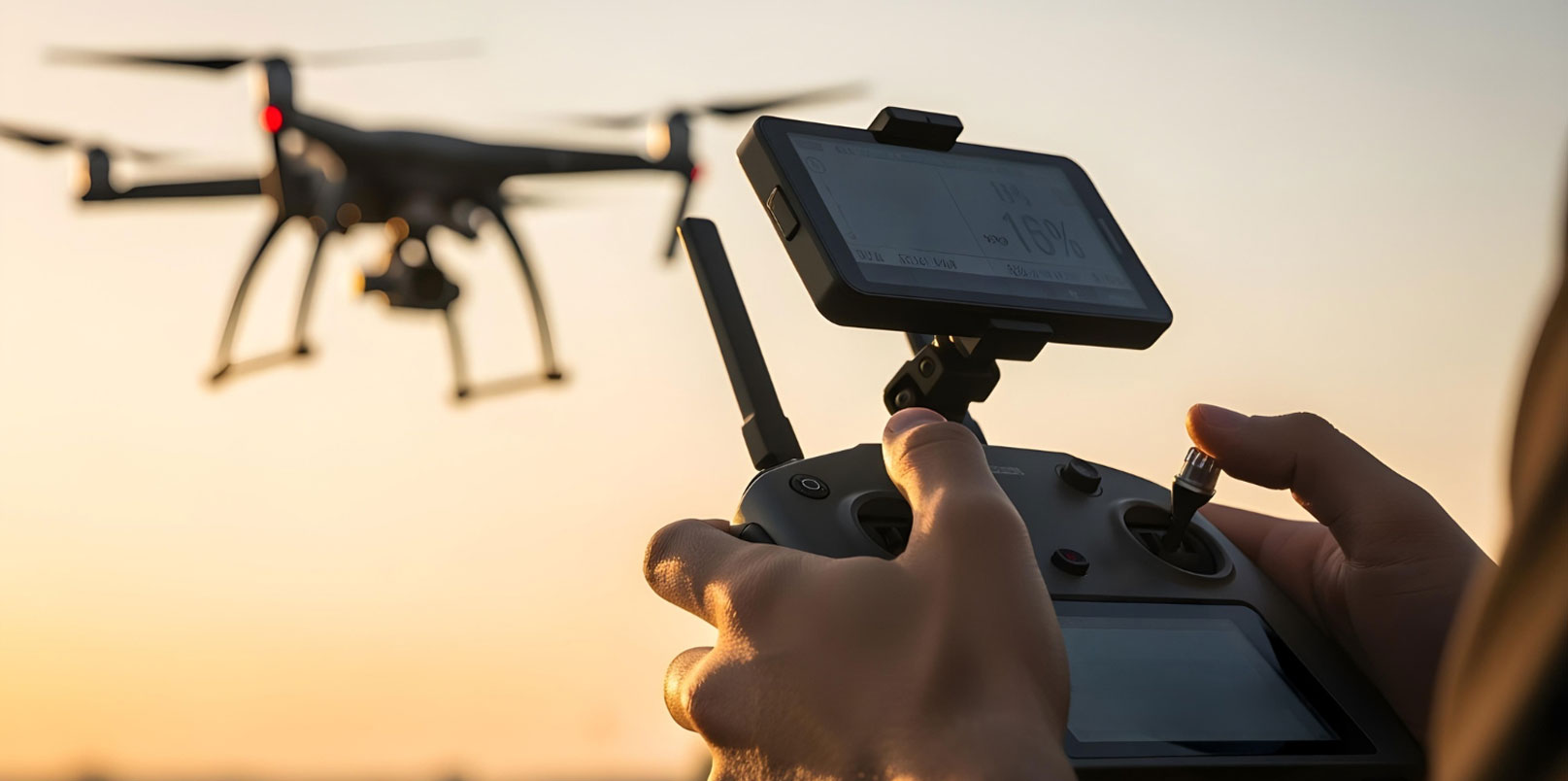
The Missing Layer in UAV Expansion — South Korea’s UAV startups are moving deeper into Southeast Asia, but recent developments suggest a shift in how that expansion is being approached. Airbility’s partnership in the Philippines highlights a practical constraint that is often overlooked in cross-border deployment. Advanced drone systems may be available, yet without trained local operators who can meet regulatory and operational requirements, deployment remains limited in real-world public-sector use.
Airbility and Danao City: A Training-First Approach to UAV Deployment
Airbility has signed a three-party Memorandum of Understanding with the Danao City Government in Cebu, Philippines, and Singapore-based KILSA Global to implement a drone pilot training program.
According to both the company’s disclosure and local government confirmation, the program begins with an approximately six-month trainer certification phase, followed by a twelve-month stage focused on technology delivery and field application.
Danao City stated that the initiative is intended to strengthen local capabilities in areas such as disaster preparedness and emergency response. The city also confirmed that participants will be nominated locally and trained using structured modules and certified instructors.
In correspondence with ngopihangat, Airbility’s Co-Founder and CPO Jaehyun Lee explained the rationale behind this approach:
“Technology alone doesn’t create a sustainable market. You need local production capacity, operational infrastructure, and trained people.”
Hence, the Philippines program is positioned as addressing that final component.

Why Drone Training Is Becoming a Deployment Requirement in the Philippines
It is crucial to understand that he need for trained operators is never just theoretical. It is embedded in the Philippines’ aviation framework.
The Civil Aviation Authority of the Philippines (CAAP) requires a Remotely Piloted Aircraft (RPA) Controller Certificate for commercial drone operations and for aircraft above certain weight thresholds, including those at or above 7 kilograms. Certification involves formal training, a minimum level of flight experience, and passing both written and practical assessments. And this certificate is valid for five years.
CAAP has also noted that while drone adoption is increasing, gaps remain in operator knowledge, including safety practices and compliance with aviation rules.
This creates a practical barrier. Even when drone systems are available, deployment is constrained by the availability of operators who meet regulatory standards and can operate within controlled airspace environments.
That is why, Airbility’s training-first model aligns with this requirement.

From Training to Deployment: Building a Local Operational Pipeline
Furthermore, Airbility’s program is designed to connect training directly to deployment rather than treating them as separate processes.
Jaehyun Lee described the structure as a continuous pipeline:
“Our phased approach is designed so that training and deployment are not separate tracks but a continuous pipeline.”
Under this model, certified trainers form the base of a broader operational layer. They are expected to support field operations, train additional operators, and contribute to long-term local capability.
The company indicated that potential applications could include disaster response, infrastructure monitoring, and public-sector use cases, depending on how local needs evolve.
This reflects a shift in how UAV deployment is approached. Instead of introducing technology first and addressing operational readiness later, the program begins by preparing the people who will ultimately use the systems.
Local Context: Disaster Preparedness and Operational Relevance
Danao City’s participation adds a practical layer to the initiative.
In early 2026, the city reported that 517 families were affected by severe flooding linked to Typhoon Tino, with homes washed out and infrastructure requiring immediate rehabilitation. Local government priorities included drainage restoration, river desilting, and flood mitigation.
Against this backdrop, the introduction of drone capabilities is being discussed in relation to disaster assessment and emergency response.
While the training program may not yet guarantee deployment outcomes, it aligns with a local context where improved situational awareness and rapid assessment tools may become increasingly relevant.
Workforce as a Constraint in Southeast Asia’s UAV Expansion
Airbility’s Philippines initiative highlights a broader issue in Southeast Asia’s UAV ecosystem.
In the same correspondence, Jaehyun Lee noted:
“Even the most advanced UAV platform has limited impact if there are no qualified operators on the ground.”
He added that the operator gap is often underestimated compared to regulatory or infrastructure challenges.
This perspective is consistent with current conditions in emerging drone markets. Regulatory frameworks are evolving, and infrastructure partnerships can address connectivity challenges. However, developing a workforce that can operate, maintain, and apply UAV systems within local conditions requires time and structured programs.
This makes training not an auxiliary activity, but part of the deployment process itself.
What This Means for Korean UAV Startups Expanding into ASEAN
Korean UAV startups are expanding internationally, supported by rising exports and policy direction in advanced mobility sectors. Data from South Korea’s Ministry of Land, Infrastructure and Transport shows drone exports reached KRW 36.8 billion in 2025, increasing by 58 percent year-on-year and spanning 30 countries.
However, expansion into Southeast Asia presents a different set of challenges.
Airbility’s Philippines program suggests that market entry increasingly involves building local capability rather than focusing solely on hardware delivery. In regulated environments such as the Philippines, trained operators are required not only for compliance but also for sustained operations.
For founders and investors, this signals a shift in execution strategy. Deployment depends on how effectively companies can integrate into local systems, including workforce development.
Deployment Begins with People
Airbility’s agreement with Danao City represents an early-stage step toward future UAV deployment, with the current focus placed on building the operational foundation required for that transition.
After all, technology can be introduced quickly, but operational readiness depends on people who can use it safely, legally, and effectively.
And in Southeast Asia’s public-sector environments, UAV expansion is no longer defined only by what the aircraft can do. It is also shaped by who is trained to operate it.

Key Takeaway
- Airbility Philippines UAV program introduces a training-first approach before deployment
- Danao City drone training program begins with 6-month trainer certification, followed by 12-month technology and field phase
- CAAP drone operator certification requires training, flight experience, and regulatory compliance
- Local drone operators Philippines remain a key constraint in real-world UAV deployment
- UAV deployment Southeast Asia depends on workforce readiness, not just technology availability
- Korean UAV startups ASEAN expansion is increasingly linked to capability-building at local level
🤝 Looking to connect with verified Korean companies building globally?
Explore curated company profiles and request direct introductions through beSUCCESS Connect.
– Stay Ahead in Korea’s Startup Scene –
Get real-time insights, funding updates, and policy shifts shaping Korea’s innovation ecosystem.
➡️ Follow ngopihangat on LinkedIn, X (Twitter), Threads, Bluesky, Telegram, Facebook, and WhatsApp Channel.
PakarPBN
A Private Blog Network (PBN) is a collection of websites that are controlled by a single individual or organization and used primarily to build backlinks to a “money site” in order to influence its ranking in search engines such as Google. The core idea behind a PBN is based on the importance of backlinks in Google’s ranking algorithm. Since Google views backlinks as signals of authority and trust, some website owners attempt to artificially create these signals through a controlled network of sites.
In a typical PBN setup, the owner acquires expired or aged domains that already have existing authority, backlinks, and history. These domains are rebuilt with new content and hosted separately, often using different IP addresses, hosting providers, themes, and ownership details to make them appear unrelated. Within the content published on these sites, links are strategically placed that point to the main website the owner wants to rank higher. By doing this, the owner attempts to pass link equity (also known as “link juice”) from the PBN sites to the target website.
The purpose of a PBN is to give the impression that the target website is naturally earning links from multiple independent sources. If done effectively, this can temporarily improve keyword rankings, increase organic visibility, and drive more traffic from search results.