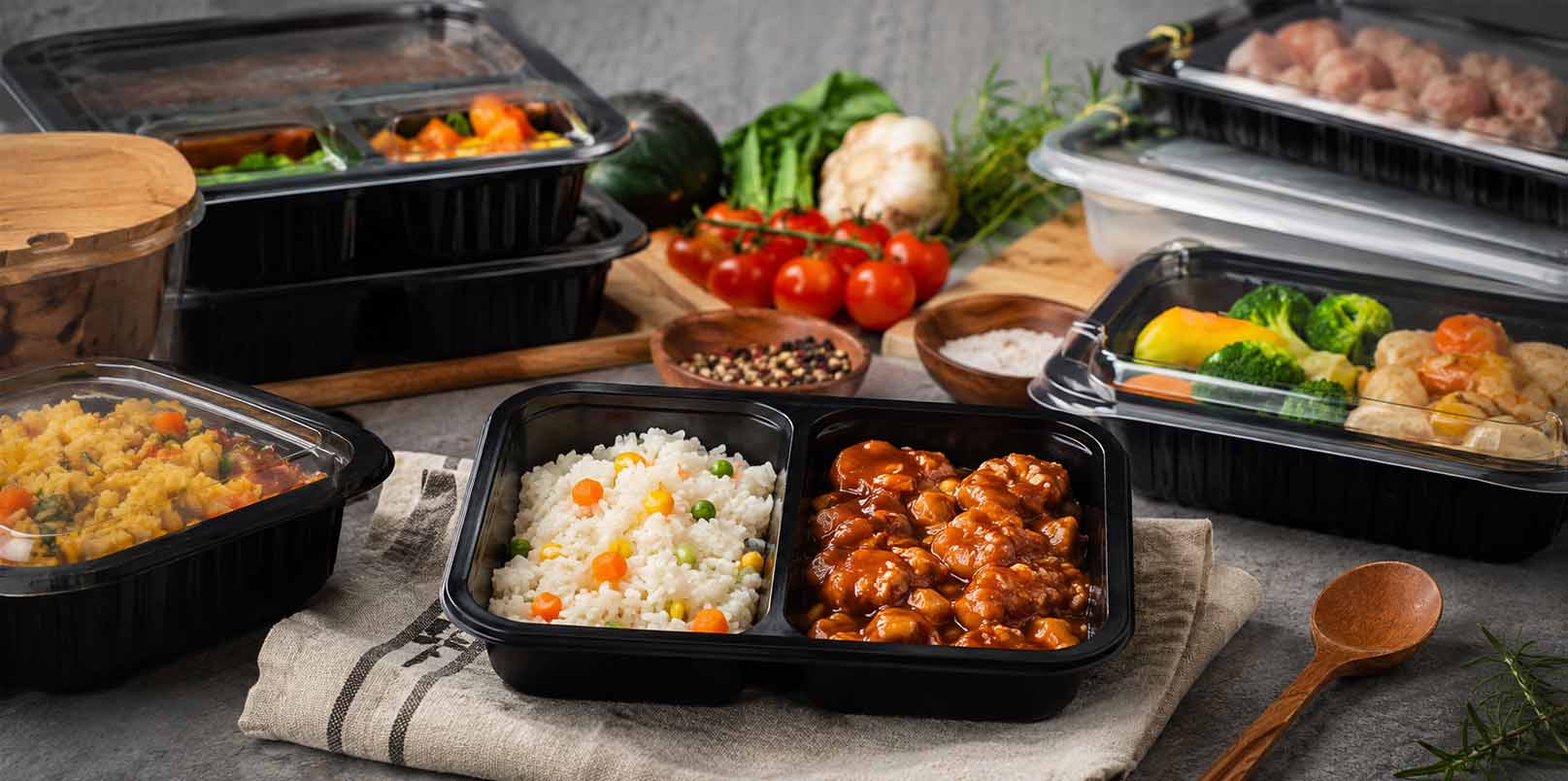
South Korea’s convenience food market continues to expand as single-person households rise, consumers seek faster meal options, and food startups rush to capitalize on the global momentum behind K-food. Yet behind the rapid growth of HMR (Home Meal Replacement) and RMR (Restaurant Meal Replacement) products, another reality is emerging inside factories, production lines, and food safety systems.
Many products that succeed in restaurants or social media struggle to survive commercialization because scaling food is not simply a branding exercise. It is an industrial engineering challenge.
Korea’s HMR Growth Is Expanding Faster Than Many Founders’ Operational Readiness
Korea’s convenience meal market has grown into one of the country’s most active food sectors. Korean industry estimates place the domestic HMR market in the roughly KRW 6.8 trillion to KRW 7.5 trillion range, supported by rising one-person households, delivery culture, and demand for quick meal preparation.

According to Statistics Korea, single-person households reached 8.045 million in 2024, accounting for 36.1% of all households in the country. At the same time, Korea’s Ministry of Agriculture, Food and Rural Affairs has been accelerating foodtech support policies, including commercialization support and smart manufacturing initiatives tied to K-food expansion.
The opportunity has attracted startups, restaurant brands, and creators eager to launch packaged food products. Unfortunately, the reality in field operation reveals that many founders has underestimated what happens after the recipe stage.
“Many entrepreneurs mistake the food industry for having a low barrier to entry,”
said professional HMR expert and CEO of Bab On Lab, Sungeun Bae, who has spent years in food product development roles at CJ CheilJedang, Market Kurly’s Next Kitchen, and Medisola, working across HMR commercialization, restaurant-to-product scaling, and health-oriented convenience meals.

During her time at CJ CheilJedang, she was involved in products including the long-running Spam Kimchi Fried Rice line.
“While the restaurant business is a service industry selling atmosphere and experience, food manufacturing is a field of engineering design for mass production.”
Why “Delicious Food” Often Fails Inside Real Manufacturing Environments
Bae explained that the logic behind preparing one serving in a restaurant differs fundamentally from producing thousands of units through an industrial process.
“In a restaurant, a chef’s hands compensate for variables in real time,”
she said.
“In a factory, the equipment, time, and temperature are the fixed variables.”

That gap becomes especially visible when restaurant brands attempt to commercialize signature dishes into HMR or RMR products.
Bae recalled working on the conversion of a popular pasta restaurant menu built around a delicate balance of cilantro, coconut cream, chicken, and acidity. Once the chef’s direct touch disappeared and the recipe was simplified for consumer preparation, the flavor profile completely collapsed.
“It failed to maintain its competitive edge as an HMR.
Delicious food and a scalable product are two entirely different disciplines.”
And this challenge extends beyond taste. Distribution conditions can fundamentally alter product texture and quality as well.
Ambient products often require high-temperature sterilization, while frozen products experience stress during freezing and thawing cycles. According to Bae, maintaining the crispness of vegetables or preserving delicate textures under these conditions remains one of the industry’s most difficult technical problems.

The Hidden Science Behind Shelf-Life, Safety, and Food Commercialization
Not only that but the operational risks increase further as well once products enter real distribution systems.
South Korea’s Ministry of Food and Drug Safety classifies HMR products under regulated convenience food categories requiring strict manufacturing, packaging, and food safety compliance. The agency has also continued conducting annual inspections across HMR facilities, identifying repeated violations involving microbial contamination, hygiene failures, expiration-date management, and improper food handling.
Bae said many founders enter commercialization discussions without understanding critical manufacturing variables such as water activity, pH control, sterilization parameters, oxygen-barrier packaging, or filling-line limitations.
“The first is hurdle technology for long-term shelf stability,”
she explained.
“Founders must simultaneously manage scientific variables such as Water Activity, pH, Thermal Death Time, and oxygen-barrier packaging. Neglecting even one of these can lead to spoilage within a month.”
She added that many founders also misunderstand how factories operate internally.
“Founders often approach factories without understanding line-specific constraints like viscosity limits, sterilization times, or filling methods.”
One example involved a food brand attempting to commercialize its signature gochujang-based sauce through HACCP-certified production. Bae explained that the conflict arose at the Critical Control Point (CCP) and the automated packaging stage.
She recounted the experience,
“To ensure microbial safety, they had to set high-heat sterilization parameters, and to facilitate automated small-scale filling, they were required to significantly reduce the sauce’s viscosity (making it thinner).”
The company ultimately abandoned commercialization because the texture changes compromised the original identity of the product.
“It was a classic case of the struggle between artisan identity and industrial standardization.”
Why Marketing Success Alone Can Push Food Startups Into Crisis
Bae also warned that many food startups focus heavily on branding and consumer marketing while underestimating operational efficiency.
“Many startups achieve outward growth through marketing prowess, but they often collapse because their internal operational efficiency cannot support that scale.”
According to Bae, food manufacturing economics depend heavily on factory utilization, stable production processes, labor efficiency, and disciplined cost structures. Companies that overcomplicate packaging or rely excessively on outsourced operations can create situations where losses grow alongside sales volume.
“This creates a dangerous structure where the deficit actually grows as sales increase.”
The risks become especially severe because food manufacturing problems can rapidly escalate into trust and compliance issues.
“Large corporations understand the economics of risk mitigation.
If proactive prevention costs one unit, reactive resolution after an issue occurs costs over 100 units.”
And that difference often separates established food manufacturers from startups still relying on instinct-driven decision-making.
As Bae cautioned,
“Without a standardized process that accounts for the product’s life cycle, they end up relying on gut feeling. That is the most dangerous variable in commercialization.”
Korea’s Food Startup Boom Is Increasing the Need for Industrial Execution Skills
As Korea continues positioning foodtech and K-food exports as strategic growth sectors, operational discipline is becoming increasingly important for founders entering HMR commercialization.
Government-backed smart factory initiatives, foodtech investment programs, and rising consumer demand may continue creating opportunities. Still, commercialization success increasingly depends on manufacturing literacy as much as product creativity.
The shift also reflects a broader reality facing food startups globally. Viral menus, restaurant popularity, and strong branding no longer guarantee scalable packaged products. Founders now face industrial systems involving sterilization standards, automated production lines, shelf-life engineering, logistics, and regulatory compliance long before products reach retail shelves.
And for many startups, the real challenge begins only after consumers say the food tastes good.

The Real Bottleneck Behind Food Startup Scale
In the end, South Korea’s HMR market is often discussed through the lens of convenience, exports, and consumer trends. Yet the industry’s deeper challenge may lie more on the operational maturity.
The founders most likely to survive long-term are not simply those with strong recipes or viral branding. They are the ones capable of translating food ideas into stable industrial systems that can survive manufacturing constraints, distribution stress, safety standards, and scaling economics simultaneously.
That transition requires a very different skill set than building a restaurant menu or attracting online attention.
As Korea’s food startup ecosystem grows, the companies that understand this distinction early may hold the strongest long-term advantage.
Key Takeaways
- South Korea’s HMR market is estimated in the KRW 6.8 trillion to KRW 7.5 trillion range, driven by demographic shifts and convenience demand.
- Single-person households reached 36.1% of Korean households in 2024, increasing long-term demand for convenience meals.
- According to Bab On Lab CEO Sungeun Bae, many founders fail because they treat commercialization as a branding problem instead of an industrial manufacturing process.
- Key operational risks include microbial control, shelf-life stability, viscosity constraints, sterilization requirements, packaging limitations, and factory compatibility.
- Bae warned that many startups rely too heavily on “gut feeling” commercialization without standardized manufacturing systems.
- Food startups can face situations where sales growth increases operational losses if manufacturing efficiency and cost structures are poorly managed.
- The article highlights how Korea’s foodtech expansion increasingly requires manufacturing literacy alongside product creativity and marketing capability.
🤝 Looking to connect with verified Korean companies building globally?
Explore curated company profiles and request direct introductions through beSUCCESS Connect.
– Stay Ahead in Korea’s Startup Scene –
Get real-time insights, funding updates, and policy shifts shaping Korea’s innovation ecosystem.
➡️ Follow ngopihangat on LinkedIn, X (Twitter), Threads, Bluesky, Telegram, Facebook, and WhatsApp Channel.
PakarPBN
A Private Blog Network (PBN) is a collection of websites that are controlled by a single individual or organization and used primarily to build backlinks to a “money site” in order to influence its ranking in search engines such as Google. The core idea behind a PBN is based on the importance of backlinks in Google’s ranking algorithm. Since Google views backlinks as signals of authority and trust, some website owners attempt to artificially create these signals through a controlled network of sites.
In a typical PBN setup, the owner acquires expired or aged domains that already have existing authority, backlinks, and history. These domains are rebuilt with new content and hosted separately, often using different IP addresses, hosting providers, themes, and ownership details to make them appear unrelated. Within the content published on these sites, links are strategically placed that point to the main website the owner wants to rank higher. By doing this, the owner attempts to pass link equity (also known as “link juice”) from the PBN sites to the target website.
The purpose of a PBN is to give the impression that the target website is naturally earning links from multiple independent sources. If done effectively, this can temporarily improve keyword rankings, increase organic visibility, and drive more traffic from search results.