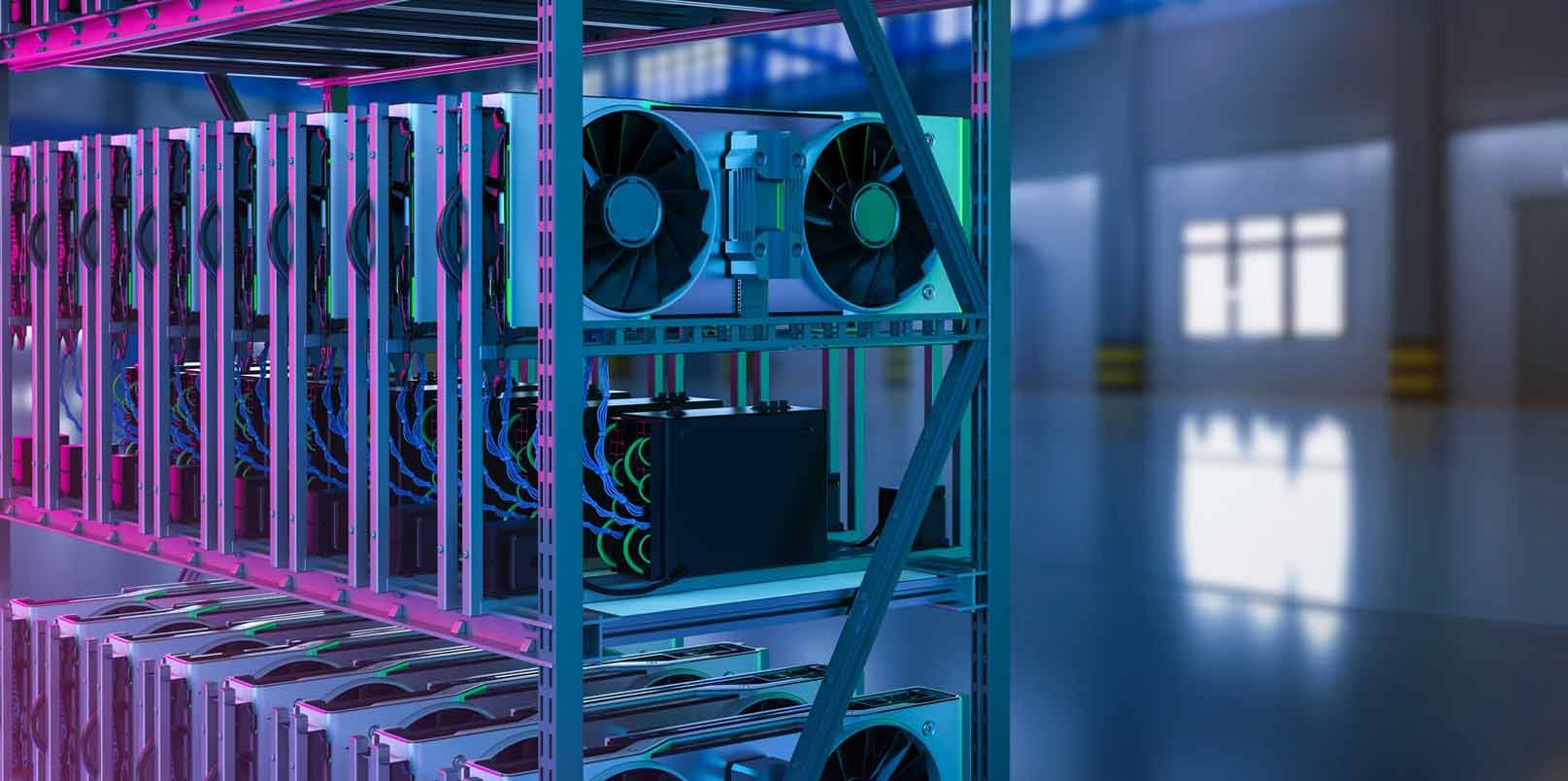
Across the world, governments and technology companies are racing to secure more GPUs as artificial intelligence becomes a strategic national priority. South Korea is no exception. Yet as billions of dollars flow into AI infrastructure, a deeper question is emerging beneath the hardware race: does competitiveness depend solely on owning more compute, or on how effectively existing compute is actually used?
Korea’s AI Strategy Is Increasingly Focused on Compute Capacity
South Korea has made AI infrastructure expansion a national priority. The Ministry of Science and ICT (MSIT) recently proposed securing an additional 15,000 advanced GPUs through its 2026 budget plan, bringing the country’s cumulative target to 37,000 GPUs across multiple national initiatives.
The broader strategy extends beyond hardware procurement. The government is also pursuing the National AI Computing Center project while expanding support for AI startups, researchers, and enterprises that require access to large-scale computing resources.
The reasoning behind this move stems from the AI development that has been increasingly depending on access to computing power. Training models, deploying applications, and supporting inference workloads all require substantial infrastructure. So, it is widely believed countries that managed to secure reliable access to compute may gain advantages in research, commercialization, and industrial competitiveness.
However, the growing focus on hardware acquisition raises another question. How much of this infrastructure will ultimately becomes real usable capacity?

The Difference Between Owning Compute and Utilizing Compute
According to Greg Osuri, the AI industry may be paying too much attention to GPU ownership while underestimating utilization challenges.
“GPU supply only touches the surface of the bottleneck, and it is not the only factor contributing to the scarcity and complexity of compute.”
As the founder of Akash Network, a decentralized cloud computing marketplace, and CEO of Overclock Labs, Greg Osuri has spent years working on compute infrastructure and resource allocation challenges.
In an exclusive interview with ngopihangat, he argues that discussions about AI infrastructure often focus on chip shortages while overlooking broader constraints across the technology stack.
“The AI industry keeps framing the boom as a chip shortage, but if you observe the entire supply chain, from GPUs through memory and into the underlying energy infrastructure, such as transformers, turbines, and grid capacity, and you factor in growing public resistance to new data center construction, the picture is one of a broader infrastructure crisis for AI.”

Now, his observation aligns with a growing body of research suggesting that utilization remains a significant challenge even within sophisticated AI environments.
In a 2024 study, Microsoft Research analyzed 400 production deep learning jobs and identified 706 GPU underutilization issues. The researchers found that average GPU utilization often remained at 50% or lower, with common causes including data loading delays, checkpoint operations, non-GPU processing tasks, and software inefficiencies. The study also concluded that nearly 85% of the identified issues could be mitigated through relatively modest code or configuration changes.
In other words, adding more GPUs does not automatically translate into more usable AI capacity.
Why Idle Capacity Matters
One of Osuri’s central arguments is that significant compute resources already exist but remain fragmented and underutilized.
“Massive amounts of GPU power already exist across idle consumer hardware, independent data centers, and fragmented global infrastructure,”
he said.
“The problem is that centralized cloud models can’t efficiently orchestrate or distribute it.”
The idea is increasingly relevant as AI shifts toward inference-heavy workloads. Unlike large-scale frontier model training, many inference tasks can operate independently, creating opportunities to distribute workloads across diverse computing resources.
The challenge becomes one of orchestration rather than procurement.
This distinction is particularly important for policymakers and ecosystem builders. Procuring additional GPUs may increase national capacity on paper, but effective allocation, scheduling, and accessibility ultimately determine how much value those resources generate.
Interestingly, South Korea’s own infrastructure plans appear to recognize this issue. The OECD’s policy tracking of Korea’s AI GPU initiative notes that idle resources are expected to be dynamically reassigned through centralized platforms designed to improve overall utilization rates.

A Real-World Test of Utilization Economics
One example cited by Osuri involved Razer’s AVA Mini campaign, which used Akash-powered infrastructure for AI image generation.
According to Razer’s published campaign information, the system generated more than 11,000 images, averaged approximately 3.24 seconds per image, and achieved peak throughput of roughly 30 images per minute.
The campaign reportedly reduced inference costs to approximately US$0.01 per image.
Osuri attributes part of the result to infrastructure that can tap dormant computing resources that would otherwise remain unused.
“Akash’s distributed infrastructure taps into dormant compute that has traditionally been locked away in homes and data centers owned by individuals and companies with no practical way to put it to use.”
It is still important to note that the example does not prove that decentralized infrastructure is suitable for every AI workload. However, it does illustrate a broader point: infrastructure efficiency can sometimes be improved by better matching workloads to available capacity rather than continuously adding new hardware.
Infrastructure Competitiveness May Depend on More Than Hardware Counts
The AI infrastructure conversation is now entering a new phase.
The first phase focused on acquiring GPUs. But the next phase may focus on maximizing the value extracted from those GPUs.
This does not diminish the importance of South Korea’s investments. Large-scale infrastructure remains essential for supporting AI development, research, and commercialization. Yet infrastructure competitiveness increasingly appears tied to operational questions involving scheduling, utilization, accessibility, and workload allocation.
And as AI adoption accelerates, the countries that gain the greatest advantage may not simply be those that own the most hardware. They may be the ones that can deploy, share, and utilize that hardware most effectively.

Beyond the GPU Race
Finally, Korea’s AI ambitions are often discussed through the lens of capacity: how many GPUs are being purchased, how much money is being invested, and how quickly infrastructure can be expanded.
Yes, those metrics matter, and they are also easy to measure unlike utilization that may be more challenging to evaluate.
However, at some point, this utilization may ultimately determine how much innovation, research, and startup activity an infrastructure investment actually produces.
And as governments and companies continue expanding AI capacity, the next competitive benchmark may not be the number of GPUs installed, but the actual percentage of those GPUs doing real useful work.

Key Takeaway
- South Korea is rapidly expanding national AI compute capacity through large-scale GPU investments and the National AI Computing Center initiative.
- Infrastructure competitiveness depends on utilization and orchestration, not only GPU ownership, according to Greg Osuri.
- GPU underutilization remains a real operational challenge, according to findings from Microsoft Research.
- The Razer AVA Mini deployment provides a practical example of how dormant compute resources can be used for high-volume inference tasks.
- AI infrastructure strategy is increasingly becoming a question of usable capacity rather than installed capacity alone.
- Access, allocation, and utilization may become as important as hardware acquisition for startups, policymakers, and ecosystem operators.
🤝 Looking to connect with verified Korean companies building globally?
Explore curated company profiles and request direct introductions through beSUCCESS Connect.
– Stay Ahead in Korea’s Startup Scene –
Get real-time insights, funding updates, and policy shifts shaping Korea’s innovation ecosystem.
➡️ Follow ngopihangat on LinkedIn, X (Twitter), Threads, Bluesky, Telegram, Facebook, and WhatsApp Channel.
PakarPBN
A Private Blog Network (PBN) is a collection of websites that are controlled by a single individual or organization and used primarily to build backlinks to a “money site” in order to influence its ranking in search engines such as Google. The core idea behind a PBN is based on the importance of backlinks in Google’s ranking algorithm. Since Google views backlinks as signals of authority and trust, some website owners attempt to artificially create these signals through a controlled network of sites.
In a typical PBN setup, the owner acquires expired or aged domains that already have existing authority, backlinks, and history. These domains are rebuilt with new content and hosted separately, often using different IP addresses, hosting providers, themes, and ownership details to make them appear unrelated. Within the content published on these sites, links are strategically placed that point to the main website the owner wants to rank higher. By doing this, the owner attempts to pass link equity (also known as “link juice”) from the PBN sites to the target website.
The purpose of a PBN is to give the impression that the target website is naturally earning links from multiple independent sources. If done effectively, this can temporarily improve keyword rankings, increase organic visibility, and drive more traffic from search results.