


Please contact Chris on +44 (0)7967 392 908 or bteepressoffice@theacademypr.com if you require any further details.
EE has unveiled ‘safer SIMs’, a trio of under‑18 mobile plans that bundle together network‑level content filters, throttled speeds, scam protection, and a ‘P.H.O.N.E.’ Chat guide.
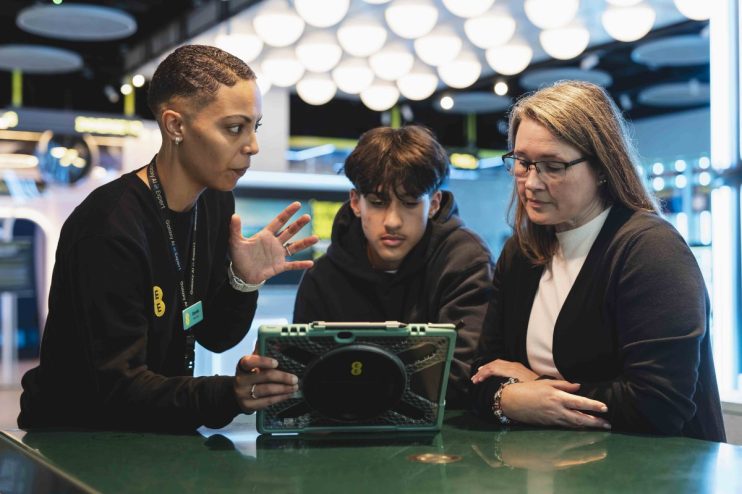
The move has been backed by in‑store safety clinics across 400+ UK branches and is pitched directly at parents overwhelmed by children’s digital exposure.
At her debut briefing as CEO of BT’s consumer arm, Claire Gillies announced on Tuesday: “At EE, we aim to play a meaningful role in the lives of our customers… there is nothing more valuable to any of us than our families.”
She framed Safer SIMs as the latest step in EE’s digital well-being journey – dating back to its ‘phonesmart’ platform, Online Safety Act lobbying, and under‑16 guidance – placing the brand strategically as an active player in digital parenting.
But whether this move is a genuine leap in youth-safe tech or merely savvy branding remains to be proved by the accuracy of its execution, teen adaptability, and real-world adoption.
EE monetises parental fear
Parents are under pressure. Internet Matters’ May 2025 Pulse survey reports that 77 per cent of children aged nine to 17 have experienced at least one online harm, an eight per cent rise from the previous year.
Meanwhile, 75 per cent of parents worry their child spends too much time online.
The 2025 Wellbeing Ibdex from the same charity added that 67 per cent of children say online harm is on the rise in its emotional impact; 41 per cent have faced false information, 27 per cent were contacted by strangers, and 22 per cent saw violent content.
Ipsos polling also found that 75 per cent of parents express concern about what children are seeing online, and one in seven aren’t confident they know their child’s exposure.
EE’s leadership is banking on that anxiety.
Gillies told attendees: “Throughout the summer holidays … many parents will be navigating the most challenging topic of smartphones with your children”.
The Safer SIMs proposition puts the telco at the nexus of emotion and practicality, seemingly offering parents a network‑level shield instead of relying on piecemeal device settings.
Yet, the telecom giant seems to be selling peace of mind in the form of telecom services, locking in subscriptions early, whilst aligning with legislative expectations.
Regulation provides cover
EE’s rollout dovetails with the Online Safety Act, enforced from 25 July 2025, which mandates strict age verification and content moderation across platforms or fines of up to £18m 10 per cent of global revenue.
While telecoms aren’t bearers of platform regulation, EE’s early alignment with Ofcom’s ‘Protection of Children Codes’ aims to position it as a partner to policymakers, with Gillies adding that the industry heavyweight is “driving leadership in digital safety”.
Ironically, some critics, from Reform UK leader Nigel Farage to civil liberties campaigner, have branded the Act “dystopian” and warned it could foster more dangerous behaviour via VPN circumvention.
Yet skepticism lingers. Gillies said EE “want every young person to be safe in their digital world, including their smartphones”.
But many modern smartphones include built-in tools – Apple Family Sharing, Google Family Link – free to activate, prompting concerns around whether EE is selling parental peace or premium rebranded basics.
Teenagers adept at VPNs or wifi may sidestep throttles and filters entirely, undermining network-level restrictions.
VPN downloads surged as the Online Safety Act began enforcement, often outpacing even ChatGPT in app rankings – a reflection of both public backlash and regulatory limitations.
While stationing trained staff for 30-minute store sessions appeals to anxious households, it may also be hard to scale. For urban professionals juggling work and parenting, the touchpoint may feel inconvenient or unnecessary for many.
Prediksi Piala Dunia
Berita Olahraga
News
Berita Terkini
Berita Terbaru
Berita Teknologi
Seputar Teknologi
Drama Korea
Resep Masakan
Pendidikan
Berita Terbaru
Berita Terbaru
Berita Terbaru
prediksi juara piala dunia 2022, prediksi piala dunia 2022, prediksi piala dunia malam ini, prediksi kualifikasi piala dunia 2022, prediksi pemenang piala dunia 2022, prediksi juara piala dunia, prediksi piala dunia hari ini
#capitalises #parental #fears #safer #SIMs #18s


