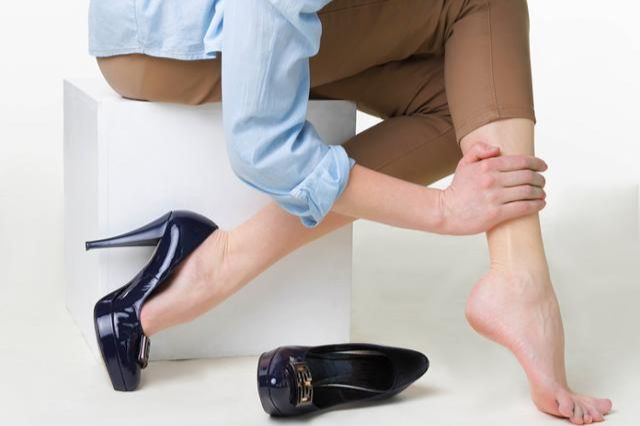
Varicose veins, a condition marked by abnormally swollen and twisted veins near the skin surface, often described as “bulging veins” on the legs, are becoming increasingly common in Korea.
According to the National Health Insurance Service, 212,000 patients received treatment for varicose veins in 2020, up from 162,000 in 2016, an average annual increase of 7 percent over 4 years.
By age group, people in their 50s accounted for the largest proportion at 26.9 percent (57,000 patients), followed by those in their 60s at 23.8 percent (50,000) and 40s at 17.9 percent (38,000).
Varicose veins occur when the valves that prevent blood from flowing backward in the legs weaken, causing blood to pool and veins to enlarge.
Symptoms include leg fatigue, heaviness, pain and numbness that is often worse after prolonged standing or sitting. Many patients also report cramps or tingling sensations at night.
Visible signs may include blue spider veins on the calves or thighs, and in more advanced cases, enlarged veins protruding from the skin. Untreated varicose veins can lead to pain, skin discoloration or even ulcers.
Women are two to three times more likely than men to develop the condition, due in part to pregnancy, hormonal factors and family history. In younger women, tight clothing, high heels and leggings can restrict circulation, contributing to the condition.
To address growing public concern and combat misinformation, the Korean Society for Vascular Surgery and the Korean Society of Phlebology have released a 16-part YouTube series aimed at improving awareness of varicose veins and related disorders.
The series features 13 vascular specialists and professors discussing topics ranging from vein anatomy and symptoms to treatment options, including non-surgical approaches. The final segment includes a discussion between the heads of both societies on the challenges of current treatment practices.
“We’ve seen increased attention on varicose veins, yet many patients rely on advertisements rather than accurate information,” said Ahn Hyung-joon, a vascular surgeon at Kyung Hee University Hospital.
The series takes a conversational approach, posing questions such as “Is surgery always the answer?” and “Do supplements help?”
“Varicose veins significantly affect quality of life, but many current treatments may be excessive,” said Heo Seung, chair of the Korean Society for Vascular Surgery and professor at Kyungpook National University Hospital. “Establishing proper standards for diagnosis and treatment is essential.”
This article from the Hankook Ilbo, the sister publication of The Korea Times, is translated by generative AI and edited by The Korea Times.
Berita Korea Terbaru
berita terbaru artis korea
Berita Olahraga
News
Berita Terkini
Berita Terbaru
Berita Teknologi
Seputar Teknologi
Drama Korea
Resep Masakan
Pendidikan
Berita Terbaru
Berita Terbaru
Berita Terbaru
berita terbaru artis korea, berita terbaru korea, berita korea terbaru, berita artis korea terbaru, berita artis korea terbaru hari ini, berita selebriti korea terbaru, berita artis korea selatan terbaru, berita terbaru artis korea hari ini, berita terbaru korea utara vs amerika, berita terbaru konflik korea, berita terbaru artis korea selatan, berita artis terbaru korea, berita terbaru korea selatan, berita terbaru korea hari ini, berita terbaru hiburan korea
#Varicose #veins #increase #percent #annually