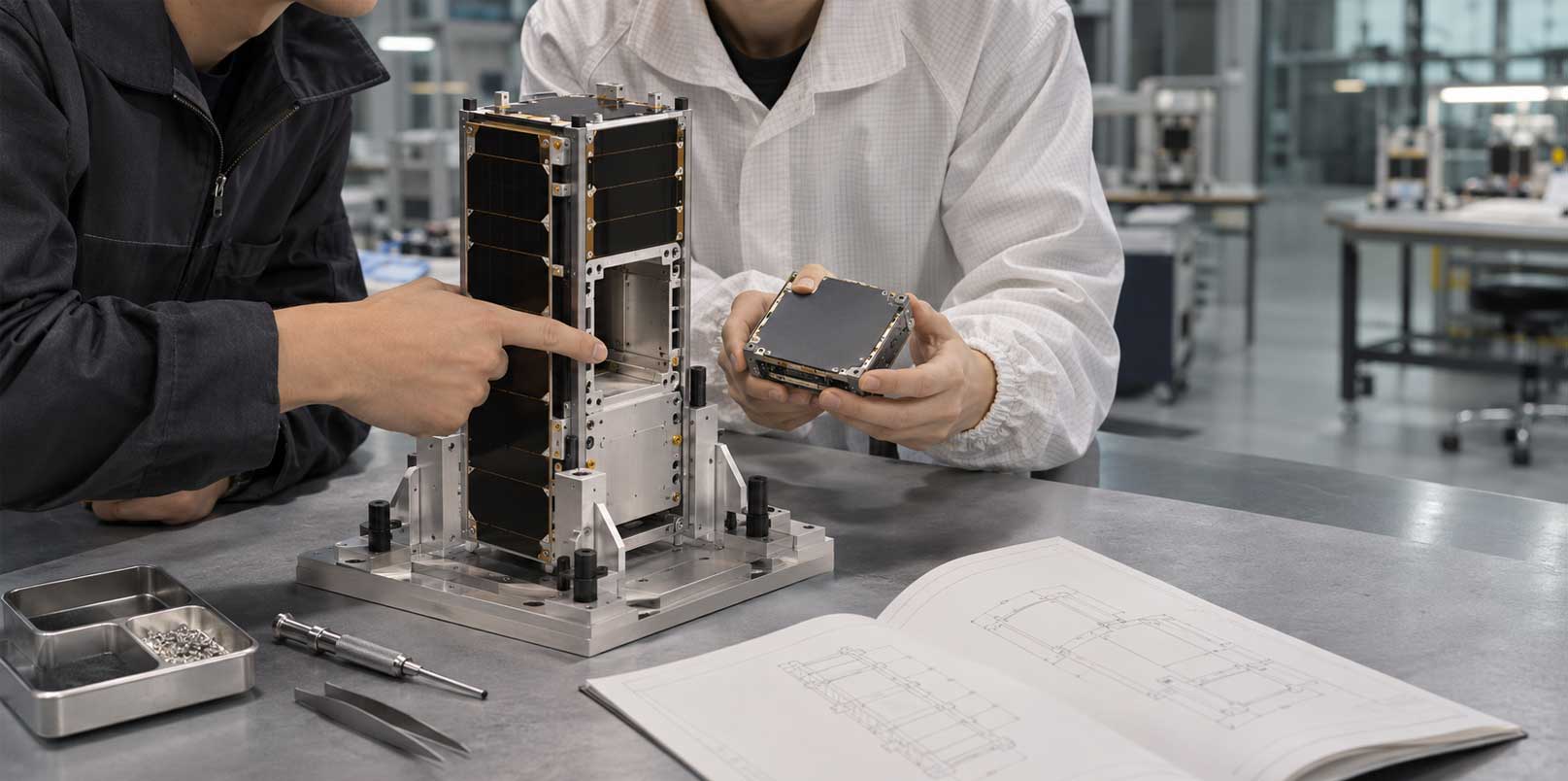
A foreign founder can leave a Korean startup program with valuable connections and still struggle to turn those introductions into a working partnership. The real test begins when a potential partner asks a question no pitch deck can answer: Can your technology fit into what we’re already building? For ArbaLabs, that question arose during discussions with Korean aerospace company Space & Bean. What followed reveals the commitment needed to earn a place in an existing satellite mission.
The Engineering Question That Changed ArbaLabs’ Korean Partnership
When ArbaLabs founder and CEO Ashley Reeves began building relationships in South Korea, his company was developing technology for independently verifying AI execution. The company had an engineering concept and early hardware, but it had not yet secured an opportunity to demonstrate the technology within an operating spacecraft.
That changed through its relationship with Korean aerospace company Space & Bean, which, at the time, was preparing the SD-1Sat satellite mission.
During an exclusive interview on Nuri’s fifth launch with ngopihangat, Reeves described a particular conversation that changed the direction of the partnership.
“The turning point was not the initial introduction itself; it was the first serious engineering discussion where the conversation changed from ‘this is an interesting idea’ to ‘how could this actually fit inside SD-1Sat?’”
The question placed ArbaLabs’ proposal within the practical requirements of an existing mission. Space & Bean had its own spacecraft objectives, technical responsibilities, and development commitments.
Reeves explained that the relationship became more concrete as both companies examined how AI verification could serve the mission and what ArbaLabs would need to contribute.
For international founders pursuing South Korea deeptech market entry, his account offers a useful measure of progress. A potential partner’s willingness to examine technical integration can reveal more about an opportunity than enthusiasm expressed during an introductory meeting.

When Interest Becomes an Engineering Commitment
According to Reeves, the discussions progressed through several stages before ArbaLabs secured a role in the orbital collaboration.
The companies initially explored the relevance of independent AI verification aboard a satellite. Their subsequent conversations became increasingly concerned with practical integration and the responsibilities involved in making the proposed demonstration possible.
Reeves identified the commitment of engineering attention as an important change in the relationship.
“There is a huge difference between someone saying, ‘this is interesting,’ and a company being willing to allocate engineering time and mission resources to test it.”
His observation addresses a challenge facing foreign hardware startups entering established industrial sectors. A company’s technology may attract interest, but further cooperation requires the prospective partner to devote resources within a project that already has competing priorities.
And for ArbaLabs, progress became more tangible when the discussion centered on what Space & Bean could accommodate and what Reeves’ team would take responsibility for delivering.

SD-1Sat Already Had a Mission Before ArbaLabs Joined
Understanding the Space & Bean partnership requires examining the satellite’s original purpose.
According to Yonsei University’s October 8, 2026, mission report, SD-1Sat was developed to investigate radiation conditions in low Earth orbit, compare the performance of shielding materials, and examine the operation of commercial electronic equipment in space.
The university’s satellite researchers developed the spacecraft platform and undertook payload integration, environmental testing, and post-launch operations. Space & Bean supplied the mission payload associated with its radiation-protection research.
ArbaLabs’ AI verification experiment became part of that broader technical program.
The Korean company’s commercial interests were already established. Space & Bean develops protective enclosures intended to improve the survivability of commercial off-the-shelf electronic components, commonly called COTS, in demanding environments.
In a September 2026 report by Korean technology outlet IT Donga, Space & Bean outlined plans to use SD-1Sat to examine the performance of protected commercial electronics under actual orbital conditions.
The company was pursuing operating data relevant to its own technology development and potential customers. ArbaLabs, meanwhile, sought an environment where its independent AI verification approach could be tested within an operational system.
And even though the companies entered the project with different responsibilities, these aligned objectives created an ideal basis for cooperation.
Why the Existing Mission Was Central to the Partnership
Joining an established Korean engineering project meant adapting to mission requirements that were already in place. For SD-1Sat’s case, Space & Bean had its own research objectives, while Yonsei University’s engineering team was responsible for developing, integrating, and operating the satellite.
Hence, ArbaLabs needed to find a practical role for its verification technology within that existing arrangement.
Reeves explained that progress came when his team demonstrated an understanding of those requirements and took responsibility for its part of the integration. This helped Space & Bean assess how ArbaLabs could contribute to the mission without disrupting the work already underway.
The experience also offers a useful perspective for foreign deeptech startups approaching Korean manufacturers and industrial technology companies. Technical capability alone may attract interest, but a workable partnership depends on how well that technology fits the partner’s existing systems and operational needs.

The ArbaLabs and Space & Bean Partnership Was Visible Before Nuri 5
The ArbaLabs and Space & Bean partnership had already produced a joint demonstration by December 2025. At COMEUP 2025 in Seoul, the companies presented a model combining ArbaLabs’ edge AI camera module with Space & Bean’s radiation-shielded enclosure, as later documented by IT Donga.
The exhibition offered an early example of technical cooperation between the two companies ahead of their later involvement in the SD-1Sat mission. Their initial demonstration also established a practical connection between ArbaLabs’ AI technology and Space & Bean’s expertise in protecting electronic equipment.
The relationship carried an international dimension as well. In its COMEUP statements, Space & Bean reported discussions about potential expansion into European markets. While ArbaLabs was establishing its presence in Korea, its Korean partner was also exploring opportunities beyond its domestic market.
Korea’s Startup Support Opened Doors, but ArbaLabs Had to Earn Its Place
ArbaLabs participated in the 2025 K-Startup Grand Challenge (KSGC), a government-backed program supporting international startups entering South Korea. In an earlier ngopihangat interview, Reeves credited the program with helping ArbaLabs establish connections and better understand Korea’s industrial environment.
That support gave the young foreign company greater access to corporations, investors, institutions, and engineering firms. However, turning those connections into working relationships required ArbaLabs to demonstrate its own capabilities.
“But there is an important distinction: the ecosystem can open the door; it cannot build the company for you.”
Reeves explained that ArbaLabs still had to develop its technology, establish a Korean entity, hire its team, protect its intellectual property, and earn its partners’ confidence through real on-the-ground execution.
The Space & Bean collaboration illustrates how those efforts continued beyond initial ecosystem connections. The decisive progress came through engineering discussions about SD-1Sat, where ArbaLabs had to establish how its technology could contribute to an existing mission.
Hence, for international founders evaluating Korea’s startup support programs, ArbaLabs’ experience offers a practical perspective on their longer-term value: the connections gained through a program can lead to opportunities that require sustained technical and business commitments well beyond participation itself.
When Engineering Interest Became a Mission Commitment
As the discussions progressed, Space & Bean’s involvement began to carry greater practical weight. According to Reeves, the Korean company’s willingness to allocate engineering time and mission resources gave ArbaLabs an opportunity to demonstrate its technology within an existing spacecraft project.
But that commitment also brought greater responsibilities for ArbaLabs. Its team had to establish what it could deliver and coordinate its contribution with the engineers responsible for SD-1Sat.
The partnership then consequently developed around a defined technical role and the resources needed to pursue it. And for foreign deep tech founders, that level of engagement offers a more concrete indication of progress than initial interest, as both organizations begin committing their capabilities to a shared project.
How Founders Can Recognize a Serious Korean Partnership
After an introductory meeting, the most useful sign of progress is often what the prospective partner does next. A positive response may lead to further discussions, but deeper engagement becomes visible when the relevant engineering team examines an actual application and begins defining the work involved.
Reeves’ experience offers a practical way to assess those developments. Has the conversation reached the people responsible for the technical problem? Is there a specific project where the technology could contribute? Has the partner begun discussing responsibilities and allocating time to the proposed work?
These questions can help international startups identify which Korean business relationships deserve sustained attention. In ArbaLabs’ case, progress became tangible when the discussion centered on SD-1Sat’s existing requirements and developed into an engineering commitment.
Beyond Introductions: When Market Entry Becomes Real Work
Entering a new market brings opportunities to meet people, establish connections, and explore potential partnerships. But eventually, a founder faces a more demanding question: Can the company earn enough confidence to take responsibility within someone else’s project?
Reeves made clear that ArbaLabs entered Korea with ambitions extending beyond startup programs.
“We did not come to Korea simply to participate in programs; we came because we wanted to build a real company here.”
Through the SD-1Sat collaboration, that ambition took on a practical meaning. ArbaLabs secured a role within an existing Korean aerospace mission, working alongside organizations with their own technical responsibilities and objectives.
And this experience leaves international founders with a question worth considering after their next promising meeting in Korea: Beyond the connections you’ve made, what real work are your prospective partners prepared to undertake with you?
The Most Valuable Meeting Leaves Real Work Behind
A promising introduction may lead to another meeting. But a serious engineering discussion carries greater responsibility, as both sides begin deciding what can be integrated, who will do the work, and how that contribution fits an existing project.
ArbaLabs’ experience with Space & Bean captures that turning point. The Korean company committed engineering attention and mission resources, while ArbaLabs took responsibility for its contribution to SD-1Sat.
And that experience offers a lasting perspective on entering Korea’s industrial ecosystem: the most valuable meeting may be the one that actually ends with real work for both sides.

Key Takeaway
- Engineering engagement was the turning point. ArbaLabs CEO Ashley Reeves identifies a technical discussion about fitting AI verification into SD-1Sat as the moment that made the Space & Bean relationship more concrete.
- The Korean partner had independent mission objectives. SD-1Sat was designed to investigate orbital radiation, shielding performance, and commercial electronic equipment. ArbaLabs contributed to an existing aerospace project.
- The partnership had a documented history before launch. Space & Bean and ArbaLabs publicly demonstrated a collaborative camera-and-shielding model at COMEUP 2025, ahead of their 2026 orbital cooperation.
- K-Startup Grand Challenge provided market access and credibility. Reeves credits Korea’s startup support ecosystem with helping ArbaLabs establish connections, while emphasizing that engineering execution remained the company’s responsibility.
- Foreign deeptech founders can assess partnership progress through resource commitments. Technical involvement, defined responsibilities, and attention to an actual project provide stronger evidence of cooperation than introductory interest alone.
– Stay Ahead in Korea’s Startup Scene –
Get real-time insights, funding updates, and policy shifts shaping Korea’s innovation ecosystem.
➡️ Follow ngopihangat on LinkedIn, X (Twitter), Threads, Bluesky, Telegram, Facebook, and WhatsApp Channel.
🤝 Looking to connect with verified Korean companies building globally?
Explore curated company profiles and request direct introductions through beSUCCESS Connect.

PakarPBN
A Private Blog Network (PBN) is a collection of websites that are controlled by a single individual or organization and used primarily to build backlinks to a “money site” in order to influence its ranking in search engines such as Google. The core idea behind a PBN is based on the importance of backlinks in Google’s ranking algorithm. Since Google views backlinks as signals of authority and trust, some website owners attempt to artificially create these signals through a controlled network of sites.
In a typical PBN setup, the owner acquires expired or aged domains that already have existing authority, backlinks, and history. These domains are rebuilt with new content and hosted separately, often using different IP addresses, hosting providers, themes, and ownership details to make them appear unrelated. Within the content published on these sites, links are strategically placed that point to the main website the owner wants to rank higher. By doing this, the owner attempts to pass link equity (also known as “link juice”) from the PBN sites to the target website.
The purpose of a PBN is to give the impression that the target website is naturally earning links from multiple independent sources. If done effectively, this can temporarily improve keyword rankings, increase organic visibility, and drive more traffic from search results.